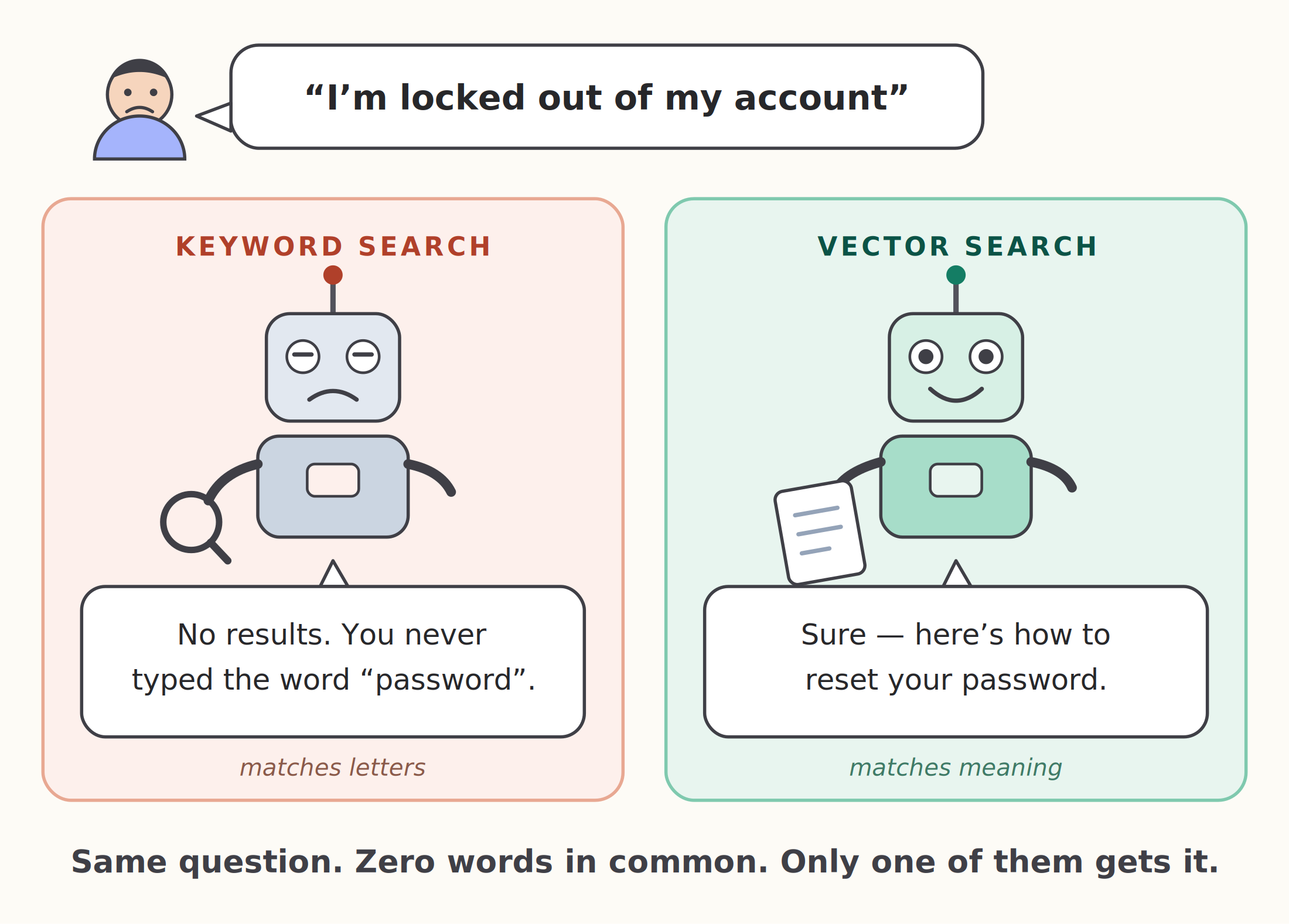
Large Language Models (LLMs) are remarkable at reasoning over the text you give them, but they have two hard limitations. One, their knowledge is frozen at training time, and second their context window can only hold so much. Vector stores are the piece of infrastructure that works around both problems, and they sit at the heart of retrieval-augmented generation (RAG), semantic search, and long-term memory for AI agents. This post covers what vector stores are, why they exist, and how they fit into an LLM application.
Tag Archives: RAG
AI Interoperability with MCP (and a Spring MCP Server example)
Model Context Protocol (MCP) is a structured, interoperable standard that enables AI agents to query, invoke, and respond to external APIs or services. Think of MCP as a universal translator that allows Large Language Models (LLMs) like Claude to seamlessly connect with databases, APIs, file systems, and other services through a standardized interface.
At its core, MCP solves a critical AI development problem: the fragmented integrations landscape. Before MCP, each AI application required custom connectors and bespoke integrations for every external service it needed to access. MCP standardizes this process through a client-server architecture where AI applications act as MCP clients and external services expose themselves through MCP servers.
